Wednesday, April 11, 2012

1984

Orwell, George.   1984.  New York: Harcourt Brace, 1949.
Audience:  High school 16+
Genre:  Science fiction, dystopian fiction.
Topics of Focus:  Totalitarianism, Dystopia, nationalism, censorship. 
Red Flags:  Sexual references, alcohol use.

“Thoughtcrime does not entail death; Thoughtcrime is death.”

This famous quote shows the nature of the book 1984, in which free thought, sex, or any other expression of individualism is punishable by death. Set in near-future London, Winston Smith, opposes the rules and begins to write a diary of his own. On an adventure into his own thought he comes across a woman named Julia who shares his interests. Under the regime of Big brother they find places to hide and have a secret love affair. They meet a man within the inner-party of the government who runs a secret operation trying to liberate human thought and join him in a quest for knowledge.

 I found this book very powerful and unique. The tone is very sinister and depressing but brings a new hope to those who have none. The rebellious nature of this novel strikes home and inspires very dangerous thoughts in its readers. This book will make you think in a very abnormal way. Although it will seem the norm is this sideways world where war is peace, freedom is slavery, and ignorance is strength. At its very best this novel will keep you up at night thinking of what the government has hidden from you and at its worst, it’s a great read. I highly recommend 1984 for all readers, especially those interested in science fiction.

Annotation by James Noyd

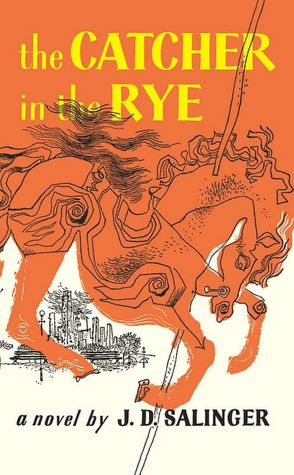
The Catcher in the Rye -- Another Perspective


Salinger, J.D.  Catcher in the Rye.  Boston:  Little, Brown and Company, 1951. 

Audience: High School students and adults: 15+
Genre: Slice of Life, Mock-Autobiography/Journal, Coming of Age
Topics of Focus: Teenage angst, belonging, family
Red Flags: Drug use/smoking, alcohol use, sexuality, strong profanity throughout, derogatory terms/actions, major depression

For at least a year, many of my friends have been telling me to read this book, using phrases such as, “It’s a classic!”, “It’s very well written!” and “I’ll disown you if you don’t read this book.” With absolutely no idea what a ride this book would give me, I opened it up and started reading. My, what a book this was.
Everyone goes through a depressive period in their teen years, and Holden Caulfield is no exception. In Catcher in the Rye, Holden is kicked out of Pencey Prep, a school that he thinks is full of phonies and mean people, and goes out to wander the streets of New York City instead of going home. There, he talks to prostitutes and drinks with old “friends,” and commentates on the human condition.
Holden is a depressed, angry, opinionated teenager. He doesn’t like people very much, and most of his social interactions are ruined by his opinions on people. Holden also hates a lot of things, from movies to phony people to being alone. Phony people are one of his least favorite things in the world; they lie, act like they’re better than others, and make you feel small, all things that make him mad. Movies bore him, and being alone makes him feel “depressed and all.” He does love his family a lot, though, especially his kid sister Phoebe. She “kills him,” or makes him laugh. He has an older brother who writes for the movies, which he thinks is stupid. Finally, he has a deceased brother who he misses dearly. “God, he was a nice kid, though. He used to laugh so hard at something he thought of at the dinner table that he just about fell off his chair. I was only thirteen, and they were going to have me psychoanalyzed and all, because I broke all the windows in the garage. I don’t blame them. I really don’t. I slept in the garage the night he died, and I broke all the goddam windows with my fist, just for the hell of it” (39).
The things that Holden does in NYC are not things I would recommend for a high schooler. In one chapter, he rents a prostitute, thinking maybe he could lose his virginity. But at the last second, he asks her if she can just talk with him for a little bit because he’s lonely. She rejects him. In another, he goes to a bar and invites an acquaintance to drink with him. The acquaintance, a highly intellectual man, leaves with a few insulting words after Holden keeps asking sexual questions. In these, Holden shows his true lonely colors. When his acquaintance leaves, he begs him to stay; “‘Have one more drink,’ I told him. ‘Please. I’m lonesome as Hell. No kidding” (149). Afterward, he drinks alone and asks a total stranger to drink with him. With the prostitute, it was even more awkward. His thoughts were far from sex due to him being so depressed. “It made me feel sort of sad when I hung [her dress] up. I thought of her going in a store and buying it, and nobody in the store knowing she was a prostitute and all. The salesman probably just thought she was a regular girl when she bought it. It made me feel sad as hell -- I don’t know why exactly” (96).
From the moment I picked up this book to the moment I finished the last page, this book spoke to me. I have never read a book that evoked the feelings of sadness and anger in the same way. There may be books that are better at evoking these feelings, but this book did it in such an interesting way through the writing style and sequence of events. It’s written in a journal-like form, with very informal speech throughout. Personally, the informalness of it all made it feel all the more real. Instead of being a very script-like way of writing, it was as if his thoughts were being said out loud. I enjoy this kind of writing, and it helped me relate to Holden more. Much like Holden, I can’t seem to fully describe how this book made me feel. It made me inexplicably sad, happy, angry, and just about everything else. This made me unable to put the book down, as it was just one feeling after another that I could relate to. I’ve heard others say that Holden is annoying, but I think that it’s just another realistic characteristic. He repeats phrases often (“goddamn,” “for God’s sake,” “. . and all,” and others) and has feelings and all. That’s what makes a realistic, if a bit annoying, character. 

 Annotation by Alec Dumas

Wednesday, January 25, 2012

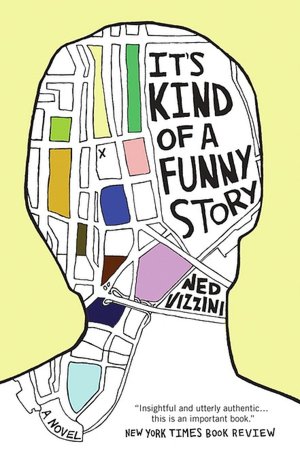
It's Kind of a Funny Story


Vizzini, Ned. It’s Kind of a Funny Story. New York: Hyperion, 2006.

Audience: High School, 15+
Genre: Young Adult Fiction, Teen Contemporary Literature 
Topics of Focus: Mental Illness, Teenage Depression, Coming of Age
Red Flags: Teen Sexuality, Alcohol Use, Drug Use
 
Are you a pot smoking, greasy-headed, hormonal, depressed teenager? Well if you are, then this is probably the book for you. Although simply written, the author truly captures the young adolescent mind and the taboo characters within a mental hospital, to make it an honest comparable novel. The author, Ned Vizzini, spent a few weeks in a mental hospital himself,  conducting the perfect research for this heart-warming, yet miserably- truthful, story.

The whole book revolves around a 16-year-old boy named Craig, who has many big problems. You know, like how his best friend is dating the girl of his dreams, or how he smokes too much weed, or maybe even how he has a B average at a very academically difficult school. Because of Craig’s issues, his mind gets wrapped into the thought basis of depression. After days of wanting to kill himself, he decides that he just might go through with it. But, when he gets to the bridge where he’s about to take the leap of faith, his mind stops. No, he doesn’t want to die; he just wants help, and somehow he ends up at a mental hospital in New York City.  The story continues to go on, introducing absurdly weird characters from the hospital, including a young girl his age, who he seamlessly falls in love with because of her deep views on the world. Being a teenager is definitely hard in its own strange way, and this novel presents it through a laugh-out-loud, accurate tale.

Although you don’t need to be an absolute genius to read this book, you may have to acquire some sensitivity towards young depression, and possibly what the boy-mind thinks about; sex. It’s a great book to gift to an adolescent attempting to get rid of their fears and desiring some comparable connection. 

Annotation by Biz Anderson

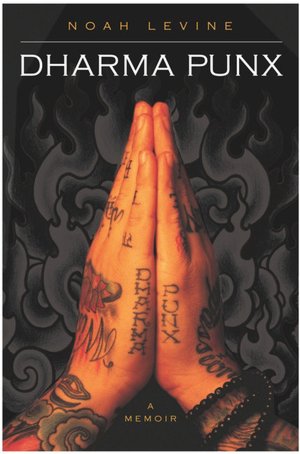
Dharma Punx


Levine, Noah. Dharma Punx. San Francisco: HarperCollins, 2004.

Audience: Anyone recovering from an addiction, running through a rebellious faze, interested in meditation, or interested in the punk rock movement.
Genre: A memoir or autobiography
Topics of Focus: Rebellion, addiction and addiction recovery, the punk rock movement, meditation, religion, finding a balance in life.
Red Flags: Alcoholism, violence, drugs, profanity, nudity, un-detailed sexy-time, suicide, death.

Noah Levine wrote this book using very truthful, blunt, and sometimes harsh language. If you are easily offended by profanity, this may not be the book for you. Dharma Punx is about Noah Levine’s life, starting from how he enveloped himself in negative situations by drinking, using drugs, and fighting; to how he came clean and fixed his life through spiritual practices. This book completely engulfs you into its ardent pages as you decipher the intense thoughts, moments, and emotions that they bear. It shows you very detailed descriptions of the hectic and in-depth experiences that Noah stumbled through as he tried to find his own path amidst the anger, panic, and confusion that made up his world.

This would be a good book to read if a teacher was searching for examples of different varieties of controversial issues to bring to discussion within a class. I would recommend this book for any classes focusing on psychology, controversial issues, or recent history. However, be aware of the fact that it contains strong language and many very negative scenarios; I would not use this book in a class of under-aged students without reading it, and discussing with each of the students and the students’ parents before hand.

Anyone who is interested in seeing through the eyes of someone who was a part of the punk rock movement, or would like to read about how meditation or religion could affect some people positively, should read this book. His book could help someone, who is willing to read and listen to advice, solve a harsh problem in their life. It’s a realistic book about the history of a real person’s life, not a metaphorical book about how someone could change their life.

Annotation by Aria Peterson

Fight Club

Palahniuk, Chuck. Fight Club. New York: Henry Holt, 1996.

Audience: A must read for anyone and everyone. (*Note: May not be suitable for children, but they should read it anyway.)
Genre: Apocalyptic Fantasy
Topics of Focus: Action, fighting, apocalypse, romance, consumerism.
Red Flags: Violence, mild language, references to sex/pornography, references to unapproved behavior in the workplace such as urinating in an improper receptacle, as well as other bodily fluids being dispensed in a non-traditionally unacceptable way, where there is a risk that a person of a higher societal status might consume something that has been contaminated by such acts.

“The first rule of fight club is you do not talk about fight club. The second rule of fight club is, you do not talk about fight club.”

These are the first two rules of fight club, an underground group of men who hold controlled fighting matches in the basement of a bar. They don’t fight because of arguments, or because one is smaller than the other, they fight because they can. For the hell of it.

The man who starts the first fight club has no name, except the fake ones he puts on name tags that he wears to various support groups. Groups like Remaining Men Together, for testicular cancer. Or one for blood parasites. Or brain parasites. The list goes on. Our anonymous main character has none of these ailments or afflictions. The only disease he can truthfully say he has is insomnia. He has found the best way for him to sleep is to surround himself with people who think he is dying. Every night. Without these various support groups, he will not sleep. So, when another fake support group attender named Marla Singer shows up, it becomes worthless to him. That is when he decides to start fight club, with the help of a man named Tyler Durden.

Fight club is a place where men can escape from the stresses of everyday life and let all their anger out into one task: beating the crap out of each other. What starts as a way for men surrounded by consumerism to feel liberated from societal norms quickly turns into a way of life. With Tyler Durden as their leader, they go beyond fighting in the basement of a bar to carrying out various missions designed to cause mass mayhem.

Annotation by Ian Jorgensen

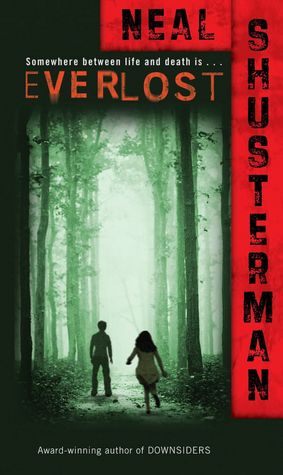
Everlost

Shusterman, Neal.  Everlost. New York:  Simon & Shuster, 2006. 

Audience:  12 +, Grade level 7
Genre:  suspense, paranormal fiction
Topics of Focus: the difference between the living world and the spiritual world. Friendship. Obsessive disorder.  
Red Flags:  NONE

An unstable soul makes any person unhappy. A complete change, you lost everything that once ‘felt real,’ Emotions, hunger, thirst and even tiredness aren’t a part of your life anymore. Everything you once knew, even your name, is forever lost. You can’t always hold on to most precious memories. You have become a ghost, which means the thing that you once were when you were living is completely lost now.  

Allie and Nick are “green souls,” eager to find the way out of this torturous world of the dead, but their souls don’t exactly get to the bright white light at the end of the tunnel. Instead, they are stuck in a world between life and death, called the Everlost. Not exactly beautiful place but absolutely way better than Hell or being stuck in the center of the world. (This happens when you stand too long on a living surface. Don’t stand around too long or you will eventually sink to the center of Earth.) You can’t come back to life. 

Allie and Nick are about to take on a journey that no ghost has ever taken before and never will. It is said that there is one person who knows this world as if she had created it herself--Mary Hightower, the self-proclaimed leader, ruler, queen of all the children to the Everlost. Mary is a kid herself, a teenager, 15 years old to be more exact. Only a year older than Nick but the same age as Allie. She has a tower for her and hundreds of lost children souls. When Nick finds Mary he feels as if he has found a home, but Allie is not so sure if she’s willing to spend the rest of her life stuck between two worlds.

Annotation by Juan Ramirez

Henry IV: Part One

Shakespeare, William. Henry IV, Part One.  New York: New American Library, 1963. 

Audience:  12+
Genre: Drama
Topics of Focus:  War, Kingship, Chivalry, Intergenerational Conflict, Duty, Honor, Taverns.
Red Flags:  Violence, Bawdy Humor, Sack Consumption, Falstaff.

William Shakespeare is known primarily as the world’s greatest playwright and poet. Henry IV. Pt. One is a wonderful example of this virtuoso’s history plays, a sequence primarily representing the period of English History from Richard II to Richard III, with the exceptions of King John and King Henry VIII. One of the cardinal virtues of this play is Shakespeare’s outstanding juxtaposition of the life of the taverns, centered around the debauched knight Sir John Falstaff, literature’s greatest comic character, the man the incomparable Dr. Johnson called “[U]imitated, inimitable Falstaff…”  with the chivalry, honor, and military prowess of the Northern Rebels, led by the choleric Hotspur, and to a lesser extent with the austere, formal dignity of the court, with the embattled Henry IV at its apex.

The play begins with the postponement of Henry’s planned crusade to Palestine due to current political conditions in England, represented shortly after by the King’s argument with Worcester and Hotspur, setting the inevitable military confrontation, consummated at the end of the play, in motion. Shakespeare does not linger at court, however, and we are quickly introduced to the Prince Hal and Sir Jack, along with an assortment of other bottom-feeding fish, as they plan to rob pilgrims and travelers. After some glorious scenes in the taverns, Price Hal’s promise to his father to reform honorably fight, and other political intrigue with the rebels, we come to the final battle, the point where the different realms come together. Falstaff is, quite unsurprisingly, cowardly; Hotspur is both valiant and killed; and Prince Harry surpasses the general expectation by killing the Northern Rebel, foreshadowing his abandonment of low-living and eventual semi-apotheosis to the status of England’s hero king. The play ends with a decision to continue the struggle against the Rebels. This play should be read, or preferably, seen, by everyone, as it is both enlightening and spectacularly entertaining. 

Annotation by Jacob Logan-Baer